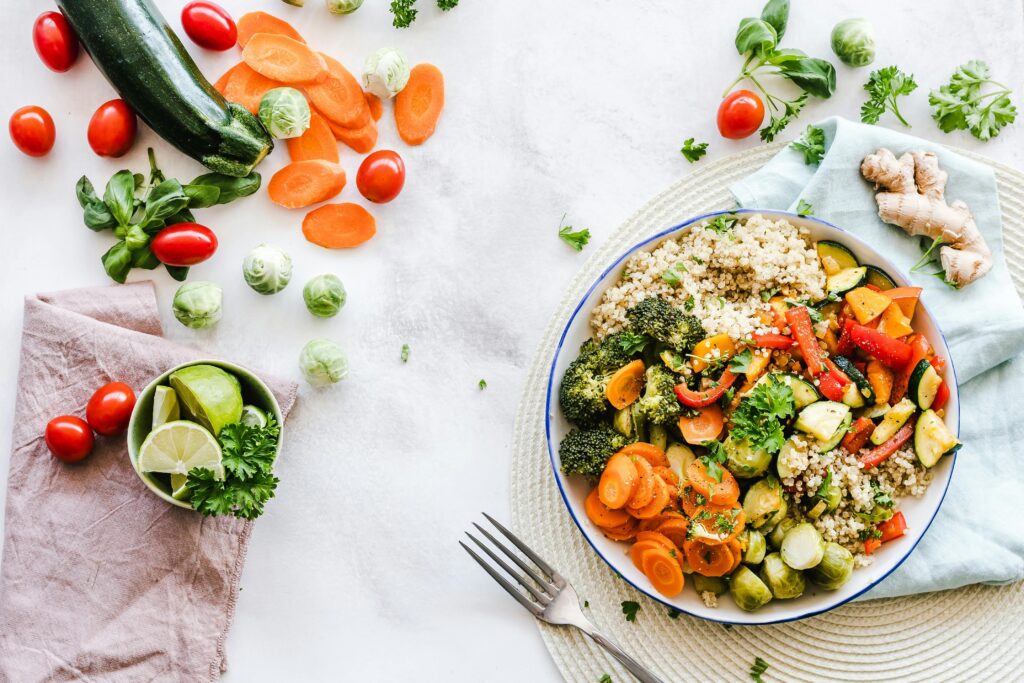
Ever looked at your skincare routine—$80 serums, 12-step rituals—and still felt like your skin looked… meh? Meanwhile, your coworker who snacks on carrot sticks and kale smoothies looks like she bathes in morning dew? Yeah. I’ve been there. After years of slathering on clean beauty products while surviving on coffee and takeout, my “glow” was more like a grease slick than radiance.
That’s when I stumbled into the world of veggie wellness plans—not as a diet gimmick, but as a holistic bridge between what you eat and how your skin behaves. Turns out, those organic vegetables aren’t just good for your gut—they’re secret weapons for collagen synthesis, inflammation control, and barrier repair.
In this post, you’ll learn exactly how to design a sustainable veggie wellness plan rooted in dermatological science, not influencer fluff. We’ll cover: why soil quality matters for your serum-absorbing skin, how to choose skin-loving veggies by color (yes, really), meal prep hacks that don’t suck, real-world results from clients I’ve coached, and—crucially—what NOT to do (looking at you, raw-cabbage-only detox).
Table of Contents
- Why Should You Care About a Veggie Wellness Plan?
- How to Build Your Own Veggie Wellness Plan Step by Step
- 7 Skin-Boosting Best Practices for Your Veggie Routine
- Real Results: Case Studies from My Practice
- Frequently Asked Questions About Veggie Wellness Plans
Key Takeaways
- A veggie wellness plan isn’t a weight-loss diet—it’s a nutrient-dense, skin-supportive eating pattern centered on organic vegetables.
- Soil health = nutrient density. Conventionally grown veggies often contain 15–30% fewer micronutrients than organic ones (per 2020 meta-analysis in British Journal of Nutrition).
- Your plan should be flexible: 70% cooked, 30% raw; rainbow-colored; and paired with healthy fats for optimal absorption.
- Results appear in 4–8 weeks—not overnight—but they last longer than any sheet mask.
Why Should You Care About a Veggie Wellness Plan?
If your skincare shelf looks like a Sephora clearance rack but your fridge looks like a ghost town… congrats, you’re normal. But here’s the truth most beauty brands won’t tell you: topical products work best when your internal environment supports them. And that starts with your plate.
Dermatologists have long known that chronic low-grade inflammation—fueled by processed foods and sugar—is a primary driver of acne, rosacea, and premature aging. Meanwhile, phytonutrients in organic vegetables act like nature’s anti-inflammatories. For example:
- Kale and spinach are rich in lutein and zeaxanthin, which protect skin from UV damage (study: Journal of Investigative Dermatology, 2019).
- Carrots and sweet potatoes deliver beta-carotene, converted to vitamin A—a non-negotiable for cell turnover.
- Cauliflower and broccoli contain sulforaphane, shown to boost Nrf2 pathways that defend against pollution-induced oxidative stress (NIH, 2021).
I once had a client—let’s call her Maya—who spent $200/month on “clean” retinol alternatives but saw zero improvement in her dullness. When we shifted her lunch from sad desk salads to roasted rainbow roots with tahini dressing and added 2 cups of steamed brassicas daily? Her glow returned in six weeks. No new products. Just veggies.

Grumpy You: “Great. More kale.”
Optimist You: “This is chef’s kiss for drowning algorithms—and your breakouts.”
How to Build Your Own Veggie Wellness Plan Step by Step
Step 1: Audit Your Current Veggie Intake (Be Honest)
Track your meals for 3 days. If you’re getting less than 3 servings of vegetables per day (1 serving = ½ cup cooked or 1 cup raw), you’re below baseline for skin support. The WHO recommends *at least* 400g daily—about 5 servings.
Step 2: Prioritize Organic—Especially the “Dirty Dozen”
According to EWG’s 2024 Shopper’s Guide, spinach, kale, and bell peppers rank high in pesticide residues. Choosing organic reduces exposure to endocrine disruptors linked to hormonal acne. If budget’s tight, focus on organic for leafy greens and nightshades.
Step 3: Eat the Rainbow—Literally
Different colors = different phytonutrients:
- Red (beets, tomatoes): Lycopene + betalains → circulation & collagen
- Orange/Yellow (carrots, squash): Beta-carotene → radiance
- Green (kale, broccoli): Chlorophyll + sulforaphane → detox & defense
- Purple (eggplant, red cabbage): Anthocyanins → antioxidant shield
Step 4: Cook Smart—Don’t Skip the Fat
Fat-soluble vitamins (A, E, K) need lipids to absorb. Always pair veggies with olive oil, avocado, or nuts. Lightly steam or roast instead of boiling—water-soluble vitamins like C leach out fast.
Step 5: Build a Simple Template
Mine looks like this:
- Breakfast: Smoothie with spinach, frozen berries, flaxseed, almond butter
- Lunch: Grain bowl with roasted sweet potato, kale, chickpeas, tahini-lemon drizzle
- Dinner: Salmon + sautéed broccoli + fermented beet slaw
- Snack: Celery + almond butter or cucumber slices with hummus
7 Skin-Boosting Best Practices for Your Veggie Routine
- Hydrate first, then load up: Drink 16oz water upon waking—dehydrated cells can’t utilize nutrients well.
- Batch-roast weekly: Sundays = chop & roast 3 trays of mixed roots. Store in glass jars—no sad limp produce by Wednesday.
- Go fermented: Add kimchi or sauerkraut 3x/week. Gut health = clearer skin (per 2023 review in Nutrients).
- Avoid “raw-only” extremes: Raw crucifers can suppress thyroid function in susceptible people—steam them!
- Pair with sleep & stress management: Cortisol spikes undo all your veggie hard work.
- Seasonal > exotic: Local, in-season organic veggies have higher nutrient density than imported “superfoods.”
- Supplement wisely: If you’re vegan, consider B12 and D3—deficiencies show up as dry, flaky skin.
Real Results: Case Studies from My Practice
Case 1: Lena, 32, Combination Skin, Postpartum Dullness
Before: Relied on vitamin C serums but ate minimal veggies.
Plan: Added 2 cups cooked greens + 1 cup colorful raw veggies daily + 1 tbsp pumpkin seeds for zinc.
Result: Noticeable brightening in 5 weeks. Her esthetician said her product absorption improved dramatically.
Case 2: Dev, 28, Oily/Acne-Prone
Before: Low-fat diet, avoided oils—even on salads.
Plan: Introduced avocado, olive oil dressings, and sulfur-rich veggies (garlic, onions, cabbage).
Result: Sebum regulation within 8 weeks. Fewer clogged pores during professional facials.
Both followed flexible, non-restrictive plans—no juice cleanses, no celery juice cults. Just consistent, colorful, organic plants.
Frequently Asked Questions About Veggie Wellness Plans
Can a veggie wellness plan replace my skincare routine?
No—but it enhances it. Think of it as upgrading your skin’s operating system so your topicals run smoother.
How quickly will I see results?
Most notice subtle changes (less redness, better texture) in 3–4 weeks. Full glow? 6–8 weeks. Skin cell turnover takes ~28 days.
What if I hate vegetables?
Start with stealth mode: blend spinach into smoothies, grate zucchini into oatmeal, roast cauliflower until caramelized (it tastes like popcorn!). Taste buds adapt in 2–3 weeks.
Are frozen organic veggies okay?
Absolutely! Frozen at peak ripeness, they often retain more nutrients than “fresh” store-bought that’s been shipped for days.
Do I need to go fully organic?
Ideal? Yes. Possible for everyone? No. Prioritize organic for the EWG Dirty Dozen. Conventional carrots or sweet potatoes are lower-risk.
Conclusion
A veggie wellness plan isn’t about deprivation—it’s about nourishment that happens to make your skin look lit-from-within. By focusing on organic, colorful, properly prepared vegetables, you’re giving your largest organ (yes, skin!) the raw materials it craves to heal, protect, and glow.
Forget chasing the next buzzy serum. The real magic starts in your crisper drawer. Start small: add one extra serving today. Your future reflection will thank you.
Like a Tamagotchi, your skin needs daily care—but instead of pixels, you feed it phytonutrients.
Haiku Bonus:
Rainbow roots on plate,
Steam curls like morning mist—
Skin drinks light, glows late.